A Prescription to Restore the Ecosystem.
Your yard can raise birds again.
About 70% of U.S. residential land is lawn and non-native ornamentals. A few keystone native plants in the right place rebuilds the food web.
What is ReNativ?
Ecology first. Design always.
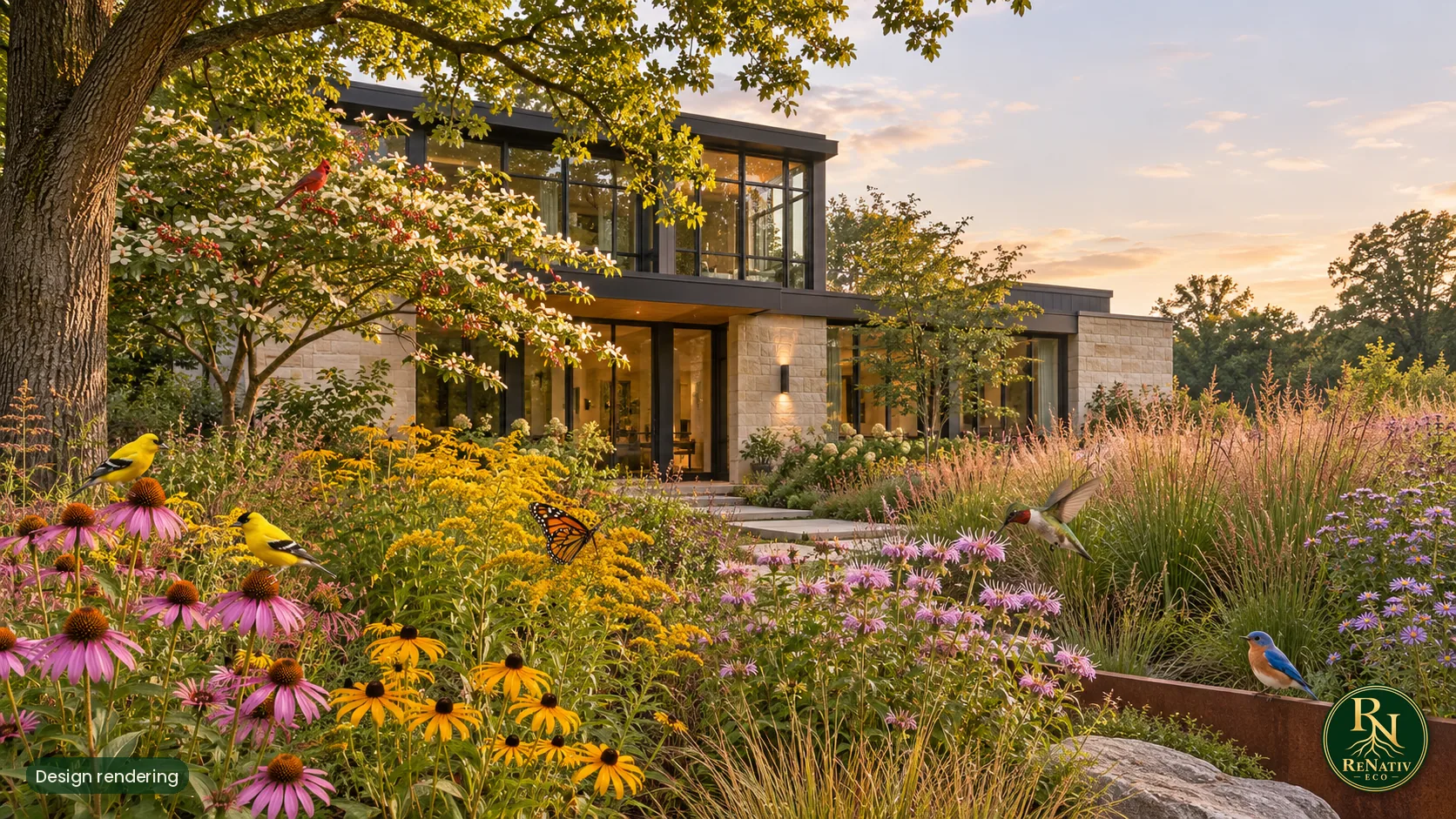
ReNativ Eco is a native landscape design company that prescribes keystone-enhanced plant designs for a property's native ecoregion.
The ReNativ Method
The ReNativ Method is our six-step process for turning lawn into living habitat.
Learn moreReNativ Eco Conservation
ReNativ Eco Conservation is our volunteer arm, starting with the Honeysuckle HackFest.
Learn moreAsk ReNativ
Ask ReNativ is a ZIP-code tool that tells you where your yard sits and where to start.
Learn moreThe ReNativ Method
Six steps, in the right order.
The ReNativ Method is ReNativ Eco's step-by-step process for restoring habitat in a residential yard.
Step Zero
Remove invasives first
Amur honeysuckle, burning bush, barberry and English ivy are still sold at big-box stores — and they are part of the problem.
Step 1
Diagnose the site
Light, soil, water, deer, pets and black walnut — every yard has conditions that decide what will thrive.
Step 2
Prescribe keystone natives
We prescribe keystone native plants matched to your native ecoregion.
Step 3
Support the keystones
Supporting natives fill the bloom calendar and the front, middle and back height tiers.
Step 4
Substitute with confidence
Every plant in a Prescription has an alternative.
Step 5
Plant and let it mature
Native beds sleep, creep, then leap. Year 3 is the payoff.
KEY Score
A number for ecological value.
KEY Score is ReNativ Eco's 0–100 ecological value score for a plant or a design, built from host-plant relationships, pollinator and bird support, and native range, verified against primary sources (Homegrown National Park, BONAP, USDA PLANTS, Xerces Society, Lady Bird Johnson Wildflower Center).


Keystone Native Plants
Small share of plants. Most of the food web.
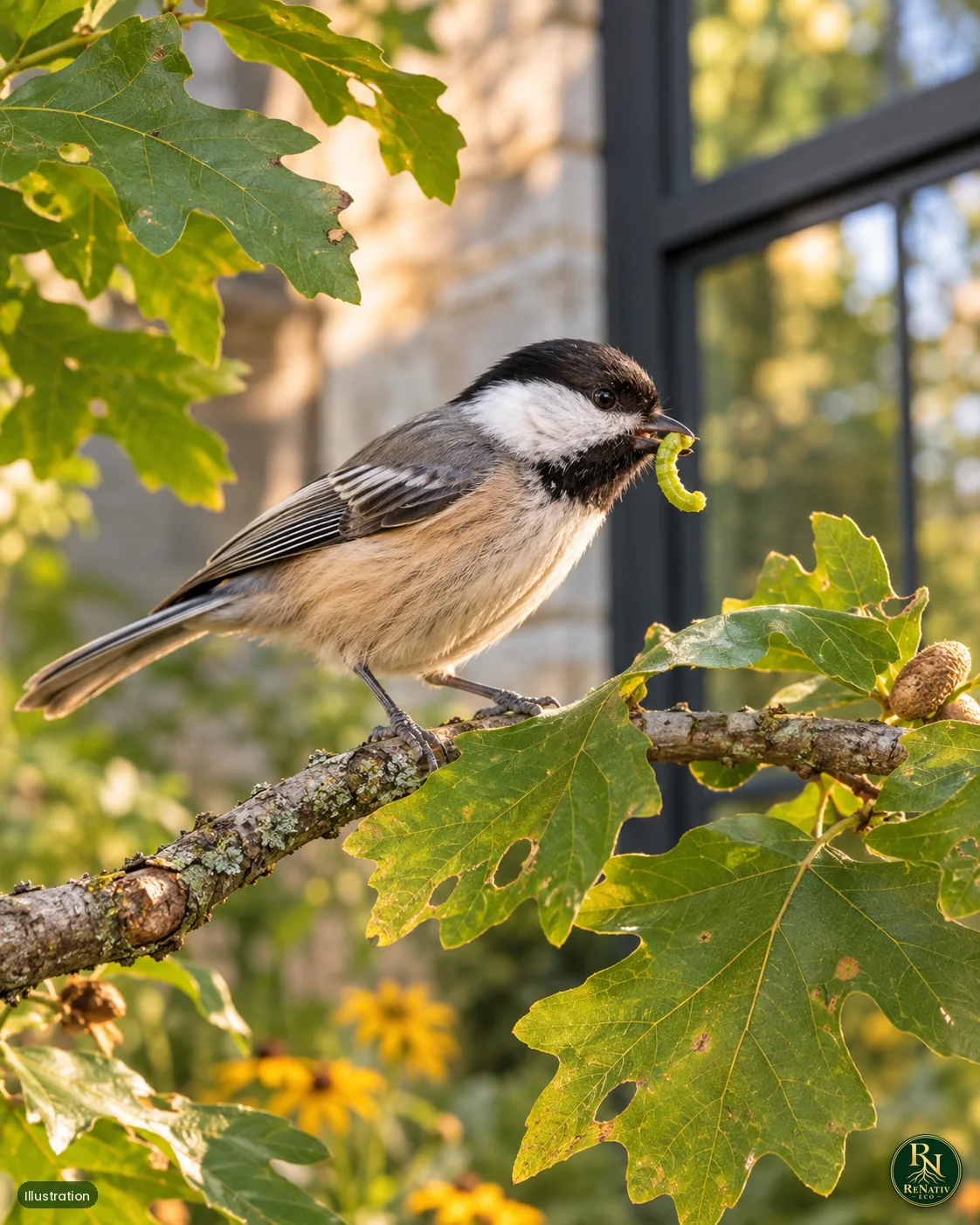
A Keystone Native Plant is a native plant that supports a disproportionate share of local caterpillars and the birds that depend on them.
About 14% of native plant genera support roughly 90% of caterpillar species (Tallamy / National Wildlife Federation research). Oaks, native cherries, willows, goldenrods, asters and sunflowers are among the keystone genera.
Where we are